
DENTAL IMPLANTS · CHANGWON, KOREA
Planned for the final tooth.
Maintained for the long term.
A prosthodontist with implant experience since 1987 and a US board-certified periodontist plan the restoration, surgery, bone, gum tissue and maintenance together.
Placement day is only the beginning.
Implants are widely available, but success depends on more than placing a fixture in bone. Dr. Sung-Hwan Park brings decades of prosthodontic and implant experience, while Dr. Hosan Park brings US board-certified periodontal training and Straumann surgical certification. Together they plan the implant position, final tooth, bone, gum stability and long-term cleaning access.
Bone and gum planned together
Bone volume, tissue thickness and the future gum line are assessed with the final restoration in mind.
Doctor-led from start to finish
Diagnosis, surgery, restoration and review remain under the doctors responsible for the plan.
Follow-up with continuity
Hana has remained in the same location since 1987 and can maintain what it places.
Natural teeth first
Extraction is not the default. If a tooth can be predictably saved, we discuss that option before an implant.
Treatment sequence.
Clinical and 3D assessment
Bone quantity and quality, gum condition, bite, adjacent teeth and relevant medical history are reviewed.
Written plan and estimate
We explain the number of implants, whether grafting may be needed, the expected phases, travel timing and estimated cost before treatment.
Implant placement
The implant is placed according to the restorative plan. Bone or soft-tissue grafting is added only when clinically indicated.
Final restoration
After integration is confirmed, the crown or bridge is connected and refined for fit, function and cleaning access.
Maintenance
Regular review of the gums, bite and home care is essential to reduce the risk of peri-implant disease.
Situations we commonly review.
| SITUATION | OUR APPROACH |
|---|---|
| You were told a tooth must be removed | We reassess whether extraction is truly necessary and discuss tooth-preserving treatment when it remains predictable. |
| Uncomfortable removable dentures | Implant overdentures and fixed options are compared against anatomy, hygiene, budget and maintenance needs. |
| Inflammation around an existing implant | We evaluate peri-implant disease, implant position, bone loss and cleaning access before recommending treatment. |
| Insufficient bone or gum tissue | A staged plan may include bone or soft-tissue grafting. Not every deficiency requires the same procedure. |
Proven systems, precise visibility.

Genuine Straumann implant systems
A globally established implant system with long-term documentation. Dr. Hosan Park is a certified Straumann implant surgeon.

ZEISS magnification
Magnified visibility supports precise management of small structures and soft tissue when clinically useful.
Cases treated by our doctors.

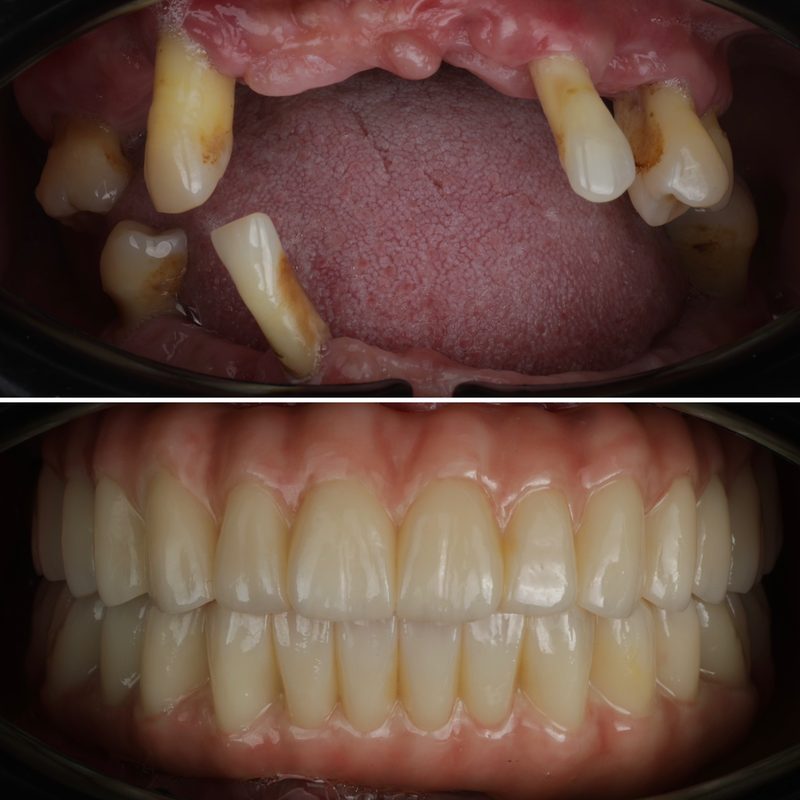
These clinical photographs show actual cases treated by Hana Dental Clinic’s doctors and are published with consent. Results vary by individual condition, and every procedure carries potential risks and side effects.
Dental implant questions
How much does implant treatment cost?
Cost depends on the site, bone and gum condition, implant number and restoration. We provide an initial estimate after reviewing records and confirm the full plan after an in-person examination.
How long does treatment take?
Many implants require a healing period before the final restoration. Immediate or accelerated treatment is possible only in selected situations. We map the likely phases and travel requirements after reviewing your case.
How long can an implant last?
Well-planned implants can function for many years, but no implant is maintenance-free. Gum disease, smoking, grinding, systemic health and cleaning access affect longevity.
Is implant surgery painful?
Implant placement is usually performed with local anesthesia. Postoperative soreness and swelling vary with the procedure, especially when grafting is added.
Can I receive implants if I have diabetes?
Many patients with well-controlled diabetes can be treated. Current health, medication and glycemic control must be reviewed before surgery.
Before accepting an extraction, ask for a second look.
Send your X-rays and concerns for an initial specialist review before arranging travel.